
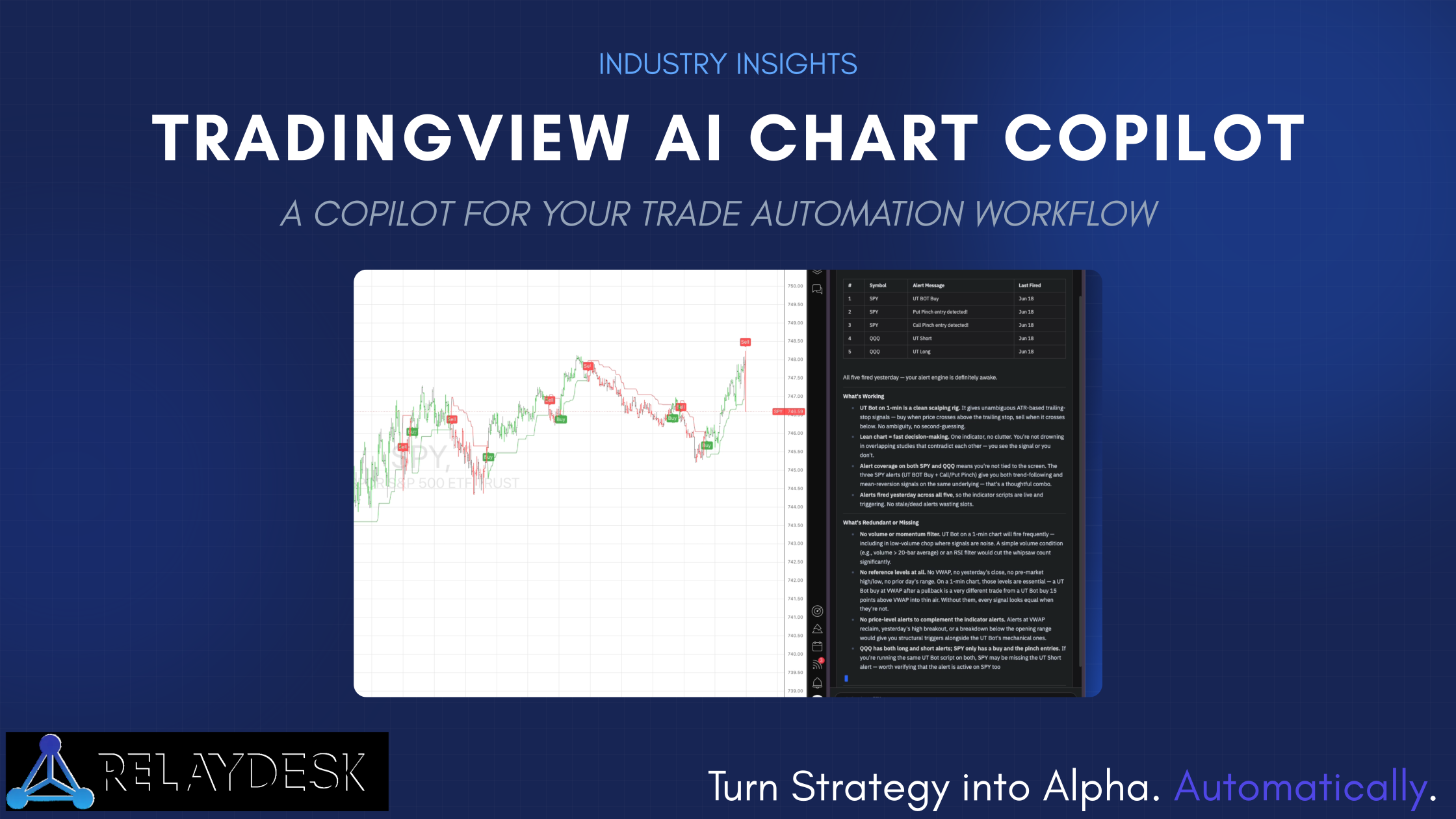
TradingView's AI Chart Copilot brings conversational chart analysis to your workflow. Here's how to turn its suggestions into live automated trades — no coding needed.
Automate your trading strategy
Start Free TrialTradingView AI Chart Copilot entered public beta on April 2, 2026, and if you spend serious time analyzing charts, it's worth adding to your setup. The extension lives in a browser side panel and lets you interact with your charts through plain-language conversation. Ask it to summarize price action, explain an RSI divergence, or set five alerts in a single request, and it responds without you leaving TradingView.
Free users get 15 AI requests per day with no credit card required, on any TradingView plan. That covers a meaningful morning session without spending anything.
One thing worth noting: Copilot is a third-party Chrome extension built by the tvremix.xyz team and promoted on TradingView's official blog. It's not yet a native part of the platform, though TradingView has committed to integrating the functionality natively once the beta stabilizes.
What Copilot can do for your analysis
Copilot covers six areas through a single chat interface: technical analysis, chart automation, alert management, news and fundamentals, watchlist scanning, and smart drawings. You can ask it to summarize MACD and RSI on your current chart, switch to a 15-minute TSLA view with Bollinger Bands applied, or create an alert when SPY crosses 520. It executes each request directly inside TradingView. For alert-heavy workflows, the conversational setup is noticeably faster than the standard TradingView dialog.
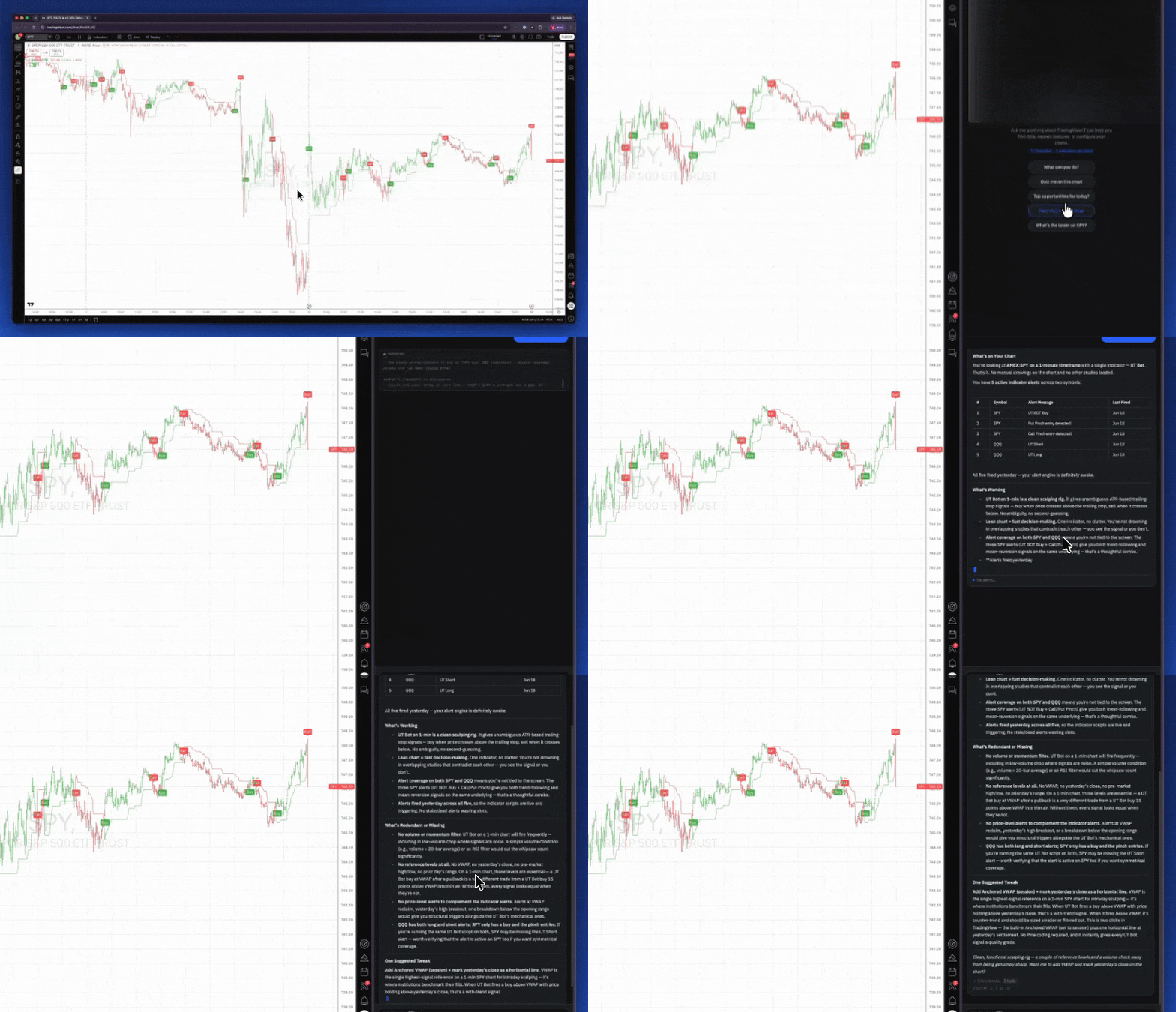
Watchlist scanning is where it earns the most ground for active traders. Instead of cycling through charts one by one, you can ask Copilot to surface oversold conditions or RSI divergence across your full list and get a plain-English summary back. That's a real shift in how much coverage you can get in a given session.
Pine Script, backtesting, and what to expect
The Copilot team is clear about the tool's scope. It cannot place live trades, run backtests, or connect to a broker API. Copilot is an analysis and alert layer, not an execution tool, and that's the right framing for what it's trying to do.
Pine Script generation is listed as a feature, but independent testing found code generation inconsistent in the current beta, with scripts frequently requiring manual fixes before they compile. The more accurate framing is that Copilot works well as a reading and debugging aid for Pine Script you've already written. Build your strategies separately and use Copilot to understand what they're seeing on the chart.
From setup to placing a trade
Copilot strengthens the analysis side of your workflow. RelayDesk closes the loop from signal to execution. The two connect naturally through TradingView's webhook alert system, and the workflow runs in three steps:
- Copilot identifies the setup. You ask it to scan your watchlist for oversold conditions, flag RSI divergence on your ES futures chart, or summarize price action near a key level. It returns the read in plain English.
- Your Pine Script strategy fires the alert. When conditions align, TradingView fires a webhook. Alerts created through Copilot can include a webhook URL, making the handoff to execution direct.
- RelayDesk routes the signal to your broker. The webhook hits RelayDesk. Your position sizing, account routing, and order type are applied automatically. The fill reaches your broker without you touching a keyboard.
The result is a continuous loop: Copilot helps you read the market, your strategy fires when conditions are met, and RelayDesk turns that signal into a live order. Each layer does what it's designed to do.
Getting set up
Setup takes about 30 seconds. Install the TradingView Remix: AI Chart Copilot extension from the Chrome Web Store, open any TradingView chart, click the icon, and sign in with your TradingView account.
The extension runs on any Chromium-based browser: Chrome, Edge, Brave, Opera, and Vivaldi. Firefox and Safari are not currently supported, which is worth knowing if your team defaults to Safari on Mac. TradingView has indicated native browser support is on the roadmap after the beta, so this is temporary.
Once Copilot is installed, connecting to RelayDesk is straightforward. Point your TradingView webhook alert to your RelayDesk endpoint, configure your position sizing and risk rules, and you're running. The quick start guide covers the full setup.